SEO Strategy · 4 min read
SEO Strategy Roadmap Mistakes: 7 Planning Errors That Slow Down Growth
Build a smarter SEO strategy roadmap with clear goals, keyword clustering and launch checks. Avoid costly planning errors and keep organic growth on track.
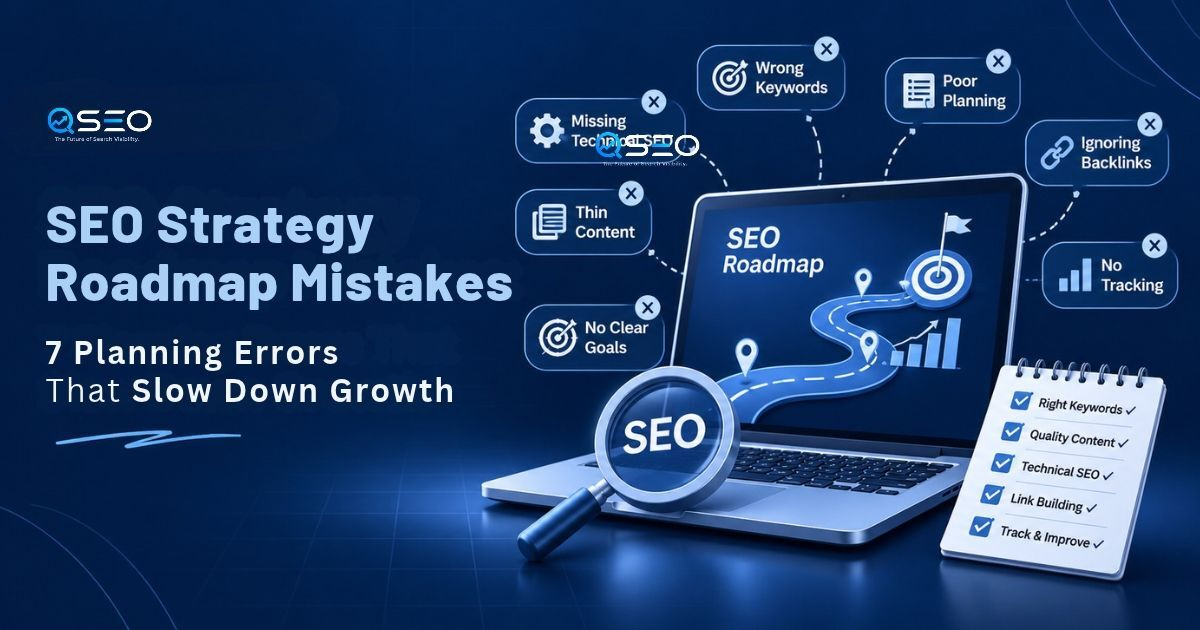
Most SEO plans don't fail in month six. They fail in week one, when the plan rests on weak assumptions. A clear SEO strategy roadmap tells your team what to fix, what to publish and what to leave alone. Below are seven planning errors that quietly slow growth, plus how OSEO Digital would correct each one for Australian businesses.
What a Solid SEO Strategy Roadmap Actually Looks Like
An SEO strategy roadmap is a sequenced plan that links your business goals to specific search tasks, owners and deadlines. It isn't a keyword list or a content calendar alone. Get it right and every month's work builds on the last. Get it wrong and you spend budget on activity that looks busy but moves nothing.
Mistakes That Start Before Day One
1. Skipping the audit. A plan built without a baseline is a guess. Start with a technical audit and a content inventory. Crawl errors, thin pages and slow templates need attention first. Otherwise, every new article sits on a weak foundation and underperforms from the day it goes live.
2. Setting vague goals. "More traffic" isn't a goal. Tie targets to enquiries, bookings or sales, then work backwards. Google's SEO Starter Guide tells site owners to focus on unique, useful content made for people, and your goals should follow the same logic. Ask what visitors need, then measure whether you delivered it.
Where Priorities Go Wrong
3. Chasing every keyword. Teams paste hundreds of terms into a spreadsheet and target them one at a time. Keyword clustering solves this. Grouping terms by shared intent lets one strong page cover a topic, instead of ten thin pages competing against each other.
4. Ignoring search intent. A long guide won't convert someone ready to buy, and a sales page won't help someone still learning. Match each page to the question behind the search, whether that's a definition, a comparison or a price check.
5. Copying competitors. Competitor research shows gaps, not a blueprint. Your services, locations and strengths differ, so your plan should too. A borrowed plan won't fit a different business. OSEO's guide to the six-stage roadmap process shows how to build around your own goals.
Launch and Measurement Slip-Ups
6. Rushing the launch. A rushed SEO campaign launch goes live before tracking, redirects and internal links are checked. Fixing that later costs weeks of lost data. Set up analytics first, confirm every key page is indexable, and only then publish.
7. Never reviewing the plan. Search changes, and so do your customers. Review the roadmap every quarter against real data such as impressions, enquiries and conversions. Drop tasks that aren't moving the numbers and put that time into what is.
Fix the Plan First, Rankings Follow
None of these errors takes months to fix. Most need an honest audit, goals tied to revenue and the habit of reviewing the plan each quarter. Start with the mistake that stings most, then work down the list.
A well-built SEO strategy roadmap also protects your budget. When priorities are clear, you stop paying for work that doesn't support growth. Reporting becomes readable, and each month's results guide the next decision.
Not sure where your plan is leaking growth? The OSEO team can review your current approach and build a roadmap around your goals, not a template. Book a free consultation or request a free website audit at oseo.com.au and see exactly where to start.
FAQs
What is an SEO strategy roadmap?
An SEO strategy roadmap is a step-by-step plan that connects business goals to search tasks, owners and deadlines. It shows exactly what to fix, publish and measure, and in what order, so every month's work clearly supports the next one.
How long does it take to build an SEO roadmap?
Timing depends on site size and how much data you already have. A small business can map a focused first version, while larger sites with many pages and locations need a longer audit. Start simple, then refine as data arrives.
What is keyword clustering in SEO?
Keyword clustering groups related search terms by shared intent so one page can target them together. It prevents pages competing with each other, makes content planning clearer and helps each page answer a full topic rather than a single phrase.
What should happen before an SEO campaign launch?
Before an SEO campaign launch, confirm analytics tracking, check redirects, test page speed and make sure key pages can be indexed. Agree on target metrics too, so you can judge results against enquiries and sales instead of vague traffic numbers.
How often should I review my SEO roadmap?
Review it every quarter at minimum. Compare rankings, enquiries and conversions against your goals, then adjust priorities. Reassess sooner after a major Google update, a website redesign or a change in your services, since each one can shift what matters.