SEO Strategy · 4 min read
SEO Strategy Roadmap: The 6-Stage Process That Compounds Results
Build a clear SEO strategy roadmap with audits, planning and action steps to improve rankings, attract traffic and grow leads. Start planning your growth!
Most businesses treat SEO like a tap. They turn it on, wait a month and expect a flood of leads. When nothing much happens, they turn it off again.
But SEO works more like savings. Each fixed page, useful article and earned link adds to the pile. Over time, those small gains start earning on their own.
The difference between the two comes down to one thing: a clear SEO strategy roadmap. Here's what that looks like, stage by stage.
How an SEO Strategy Roadmap Builds Lasting Search Growth
An SEO strategy roadmap is a staged plan that moves from a discovery audit to planning, implementation, launch, refinement and expansion. Each stage builds on the last, so gains in rankings, traffic and enquiries compound over time instead of resetting every month.
Why Search Now Demands a Structured Plan
Search has changed fast. People now find answers through classic results, AI Overviews and conversational tools.
In its Q2 2026 earnings remarks, Google said AI Mode has passed 1 billion monthly active users. Google also noted that AI Overviews and AI Mode now work as one Search experience.
Random tactics can't keep up with that. A roadmap helps you stay visible in both traditional rankings and AI-generated answers.
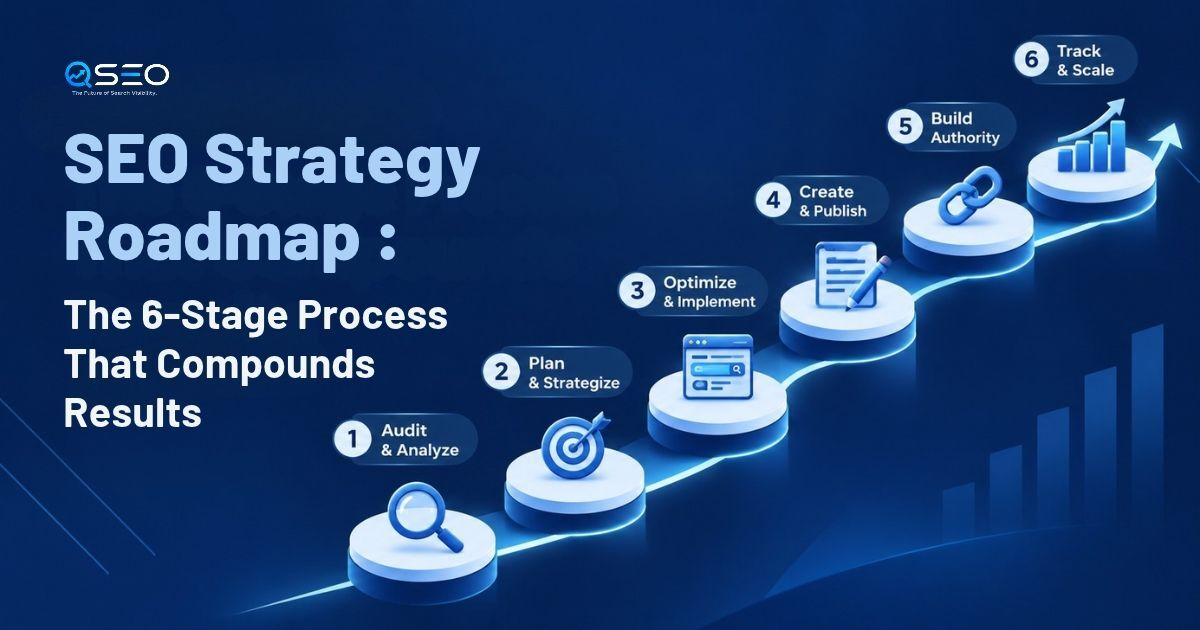
The 6 Stages of a Results-Driven SEO Roadmap
Stage 1: Assess With an SEO Discovery Audit
Every strong plan starts with facts. An SEO discovery audit reviews your goals, competitors, technical health, content and backlinks.
It shows what's holding you back and where the quickest wins sit. Google's own guidance says a good audit should give realistic estimates, not promises.
Stage 2: Plan the Strategy
Next, turn the audit findings into priorities. This means keyword clusters, page mapping and gaps in AI visibility.
Each task gets a clear goal, an owner and a timeline. Nothing is left to guesswork. Quick wins and long-term projects sit side by side.
Stage 3: Execute the SEO Implementation Plan
Now the real work begins. A solid SEO implementation plan covers technical fixes, on-page updates, new content and authority building.
Tackle high-impact, low-effort tasks first. Early wins build momentum and confidence across your team.
Stage 4: Publish and Track
Roll out changes in planned batches, not all at once. That way, you can see which changes made a difference.
Set up tracking in Google Search Console and Google Analytics 4 before launch. Good data now saves confusion later.
Stage 5: Refine Using Real Data
Review performance regularly. Look at rankings, clicks, conversions and Core Web Vitals.
Double down on what's working and fix what isn't. Your SEO implementation plan should change as the data does.
Stage 6: Expand Into New Opportunities
Once the core is strong, grow further. Target new services, locations or overseas markets.
This is where compounding really shows. Each new page benefits from the authority you've already built.
Common Mistakes That Stall SEO Progress
Even good plans fail when these habits creep in:
- Skipping the audit: guessing leads to wasted effort
- Chasing too many keywords: focus beats volume
- Ignoring technical health: slow, broken pages hold content back
- Stopping too early: SEO rewards consistency
- Trusting ranking guarantees: Google warns against anyone who promises them
A fresh SEO discovery audit each year helps you catch these problems early.
Small Wins Today, Serious Momentum Tomorrow
SEO rarely transforms a business overnight. It works when you stop switching tactics and start stacking progress.
A clear SEO strategy roadmap turns scattered effort into steady growth. OSEO Digital follows a six-stage SEO process built around this approach, helping businesses across Australia grow visibility in both search results and AI answers.
Frequently Asked Questions
How long does it take to see SEO results?
It depends on your site, competition and starting point. Some technical fixes show fairly early movement, while content and authority take longer to build. Ask any SEO provider for realistic estimates, and be very wary of guaranteed timelines or rankings.
What is included in an SEO discovery audit?
An SEO discovery audit reviews technical health, site structure, content quality, keywords, backlinks and competitors. It also checks business goals and current performance data, then highlights the priority issues and growth opportunities so the strategy starts from facts, not assumptions.
What should an SEO implementation plan include?
A clear SEO implementation plan lists every task, its priority, owner and deadline. It usually covers technical fixes, on-page updates, content creation and link building, with tracking set up so you can clearly measure the real impact of each change.
How often should an SEO roadmap be updated?
Review your SEO strategy roadmap at least once every quarter. Update it sooner after major Google algorithm updates, site migrations or shifts in business goals. Regular reviews keep your priorities closely aligned with real performance data and fast-changing search behaviour.
Does SEO still matter with AI search tools?
Yes, very much. Google's AI Overviews and other AI chat tools still draw heavily on well-structured, trustworthy web content. Strong technical foundations, clear answers and genuine expertise help your pages rank in traditional results and get cited in AI-generated answers.