On-Page SEO · 6 min read
On-Page SEO Optimisation: The 2026 Checklist Every Australian Business Needs
Improve on-page SEO optimisation with simple 2026 tips for titles, content, headings, URLs, images and links for stronger search visibility.
Search engines have become better at understanding what users want, so simply adding keywords to a page is no longer enough. A strong on-page SEO optimisation approach helps Australian businesses make their websites easier to understand, navigate and find. Whether you run a local service, online shop or growing company, this on-page SEO optimisation checklist can help you improve important website elements in 2026.
What Does On-Page SEO Optimisation Include?
On-page SEO optimisation covers the changes made directly to your website. This includes page titles, headings, content, URLs, images, internal links and other elements that help search engines understand each page.
A good approach also considers what Australian customers actually search for. Your pages should answer their questions clearly instead of simply repeating keywords.
2026 On-Page SEO Optimisation Checklist
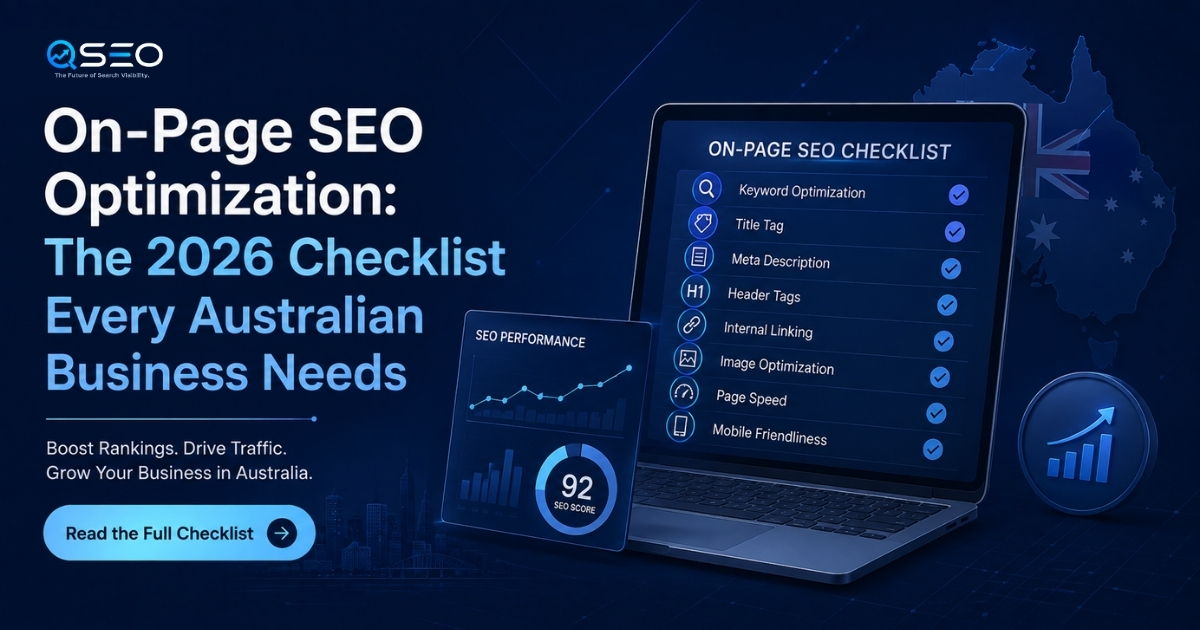
The checklist below walks through the five on-page elements that matter most in 2026. Work through each one on your most important pages first, then roll the same process out across the rest of your site.
1. Write Clear, Relevant Title Tags
Every important page needs a unique title that explains what the page offers. Include the main topic naturally and make the wording useful to searchers. Avoid long, repetitive titles. A clear title can help both search engines and potential customers understand the page before they click.
2. Improve Your Meta Descriptions
A useful meta description should briefly explain the page and encourage the right audience to visit. While it does not directly determine rankings, it can influence clicks from search results. Include relevant terms naturally, but focus on explaining the benefit of visiting your page.
3. Use Headings Properly
Organise your content with one clear H1 and useful H2 and H3 headings. This makes longer pages easier to scan. Your headings should describe the information that follows. Adding relevant phrases where they fit can support on-page SEO optimisation without making the content sound forced.
4. Create Helpful, Localised Content
Australian businesses should create content that reflects their actual customers and locations. Mention relevant cities, regions, services or customer needs where appropriate. A well-planned SEO content strategy can help you build useful service pages, guides and articles around topics your audience searches for throughout the year.
5. Check Your URLs
Keep URLs short, readable and relevant to the page. Avoid unnecessary numbers, symbols and long strings of words. A clean URL can make the page topic easier to understand and gives users a clearer idea of where they are on your website.
Technical Checks That Support On-Page SEO
Content alone cannot fix every SEO issue. Broken links, slow-loading pages, poor mobile performance and indexing problems can affect how effectively search engines access your website.
A technical SEO audit in Australia can help identify these problems and highlight areas that need attention. Businesses should also check their XML sitemap, redirects, canonical tags, structured data and robots.txt file regularly.
Optimise Images and Internal Links
Compress images without sacrificing useful quality and use descriptive file names and alt text where appropriate. This can improve accessibility as well as page performance.
Internal links also deserve attention. Link relevant pages together using natural anchor text so visitors can discover related information. Strong internal linking forms an important part of on-page SEO optimisation.
Review and Update Your SEO Content Strategy
SEO is not a set-and-forget task. Search behaviour, competitors and business priorities can change. Review important pages regularly and update outdated information, statistics, links and service details.
Your SEO content strategy should also identify gaps where new pages or useful guides could answer customer questions.
Conclusion
A successful on-page SEO optimisation plan combines useful content, clear page structure, technical health and a good user experience. Regular reviews can help Australian businesses keep their websites relevant as search continues to evolve. OSEO Digital can support businesses looking to strengthen their SEO approach with practical optimisation and strategy.
FAQs
What is on-page SEO optimisation?
On-page SEO optimisation involves improving elements directly on a website, including titles, headings, content, URLs, images and internal links. The goal is to help search engines understand pages while making information easier and more useful for visitors.
How often should Australian businesses conduct SEO checks?
Businesses should review important pages regularly and consider a technical SEO audit in Australia at least annually, or more often after major website changes. Regular checks can identify indexing, speed, broken-link and other technical issues before they become bigger problems.
Does local content matter for Australian SEO?
Yes. Australian businesses can benefit from content that reflects their target locations, services and customer needs. Mentioning relevant locations naturally can improve relevance for local searches. Avoid adding city names repeatedly when they do not provide useful information.
What should an SEO content strategy include?
An SEO content strategy should cover audience research, search topics, content gaps, service pages, useful guides and regular updates. It should connect content with genuine customer questions and business goals rather than focusing only on inserting keywords into articles.
Can technical SEO affect on-page performance?
Yes. On-page SEO optimisation works best when technical foundations are healthy. Slow pages, broken links, indexing problems, mobile issues and incorrect redirects can prevent search engines from properly accessing or understanding your content, even when the page itself is well written.