Generative Engine Optimisation · 4 min read
Google AI Overviews Optimisation: How to Get Featured in 2026's Answer Boxes
Use Google AI Overviews optimisation to build clear content, improve search visibility and make your pages easier for AI search tools to understand.
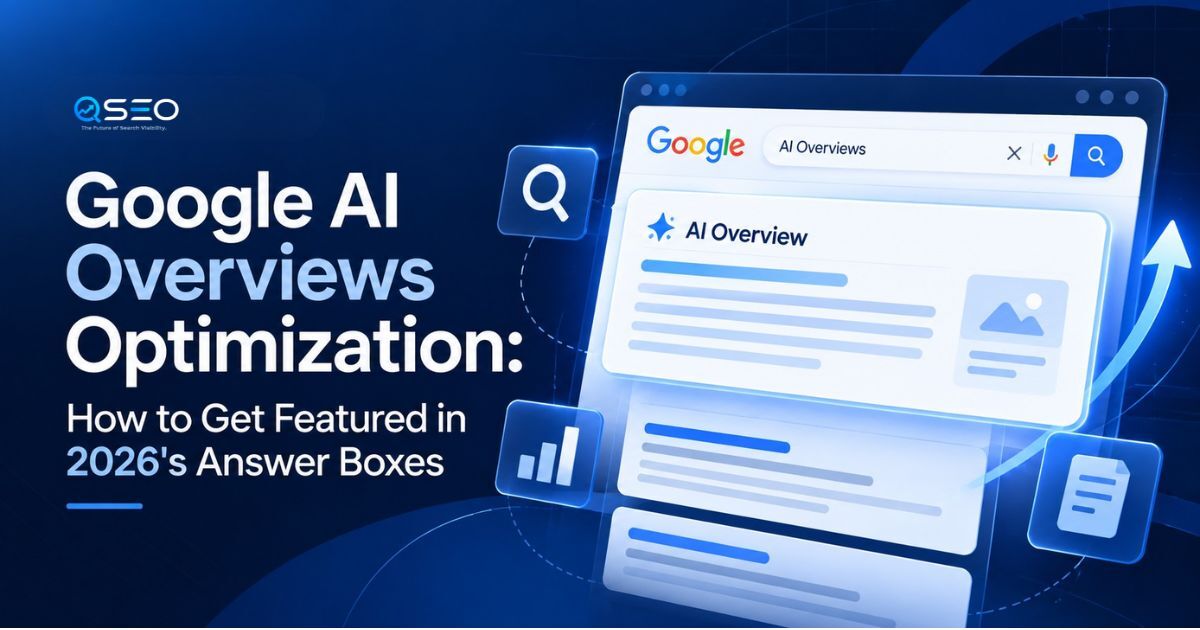
Google search has changed. Ask a question now and you'll often see an AI Overview at the top, pulling bits from several sites into one answer. For a business, that's a fresh chance to be seen before anyone scrolls down.
Google AI Overviews optimisation is about making your content clear, useful and easy for Google to make sense of. Regular SEO still counts. Weak organic rankings usually mean weaker odds of appearing in the Overview.
What Google AI Overviews Look For
Google tends to build these answers from pages already in the regular results, picking the passages that fit best. So Google AI Overviews optimisation isn't about some special tag you add to a page, and nobody can promise you a spot.
You need content that answers real questions properly. Descriptive headings, short explanations, accurate facts and focused pages make each section easier for Google to read and lift out.
Build Content Around Real Questions
A good Google AI Overviews optimisation plan starts with what your audience actually asks.
Don't build pages around single keywords. Group related questions into topic clusters instead. Write one detailed main page, then support it with shorter articles on specific questions. Link them so search engines see how they fit.
OSEO takes the same line with content strategy, working with topic clusters, search intent and internal links rather than one-off blog posts.
Use a Strong LLM Visibility Strategy
A decent LLM visibility strategy looks past Google. Plenty of people now ask ChatGPT, Gemini or Perplexity when comparing products or services.
Consistent brand details and content worth quoting help these tools understand what you do. OSEO builds its generative search work around the same ideas: citation-worthy content, knowledge graph work, stronger brand entities and a joined-up LLM visibility strategy.
You're not writing for robots, though. Write for people who want to follow, check and use what they read.
Make Every Answer Easy to Extract
AI citation optimisation starts with plain good structure. Where it fits, phrase a heading as a question, then answer it straight away before going into detail.
Keep key facts near the heading they belong to. Don't bury the answer halfway down a long paragraph. Tables, short lists and quick definitions help when a topic gets complicated.
OSEO aims for the same thing when preparing pages for AI Overviews: clear answers, meaningful headings and a tidy layout.
Strengthen Technical SEO
Great content won't get far if Google can't crawl or index your site. As part of your Google AI Overviews optimisation work, check page speed, mobile usability, internal links, indexing, structured data and any broken pages.
At OSEO, technical SEO sits at the core of the process, next to keyword research, on-page work and content strategy.
Keep important pages open to search engines and the site layout logical.
Improve AI Citation Optimisation
AI citation optimisation means writing content an AI tool can safely point to when it needs a source for its answer.
Share your own research if you have it. Cite trusted sources, keep claims accurate and show who wrote the page and why they know the subject. When facts, products, rules or industry practice change, update the page.
OSEO's recent guidance treats AI citations as their own measure of visibility, separate from rankings and traffic.
Track More Than Rankings
Your ranking position is still worth watching, but it only shows part of the picture. You can rank well and still see a competitor named in the AI answer.
A practical LLM visibility strategy tracks organic performance alongside mentions and citations on the AI platforms your customers use. OSEO measures search success the same way, looking at AI citations, organic traffic, qualified enquiries and map visibility.
Conclusion
Google AI Overviews optimisation comes down to solid SEO, helpful answers, clear structure and information people can trust. Add AI citation optimisation and a focused LLM visibility strategy, and your site will be ready for how people search in 2026. Skip the shortcuts and make each important page properly useful. OSEO Digital brings SEO, AEO and GEO together to help Australian businesses get seen across traditional and AI-led search.
FAQs
What is Google AI Overviews optimisation?
Google AI Overviews optimisation means shaping your content so Google can understand it, pull from it and possibly quote it in AI answers. It covers SEO basics, clear headings, direct answers, accurate details and content that matches what people are really searching for.
Does Google AI Overviews optimisation replace traditional SEO?
No. You still need traditional SEO, because strong organic visibility gives Google a reason to consider your pages at all. Google AI Overviews optimisation works alongside technical fixes, keyword research, helpful content, internal links and authority building. It doesn't replace them.
What does an LLM visibility strategy involve?
An LLM visibility strategy helps language models and answer engines understand your business and mention it. That usually means a clear brand identity, consistent details across the web, helpful content, trusted sources, pages worth citing and checking how often you appear in AI answers.
How does AI citation optimisation help a business?
AI citation optimisation helps AI search tools trust your content enough to reference it. When your facts are clear, sources are solid and your passages are well organised, these tools can more easily pick your page as a supporting source.
How long does it take to appear in Google AI Overviews?
There's no set timeframe, and nobody can guarantee inclusion. It depends on how relevant your page is, how well it ranks, content quality, competition and Google's systems. Treat Google AI Overviews optimisation as ongoing search work.