Answer Engine Optimisation · 5 min read
Featured Snippet Optimization: How Australian Brands Can Win Position Zero
Improve search visibility with featured snippet optimization by structuring clear answers that help your content compete better for Position Zero on Google
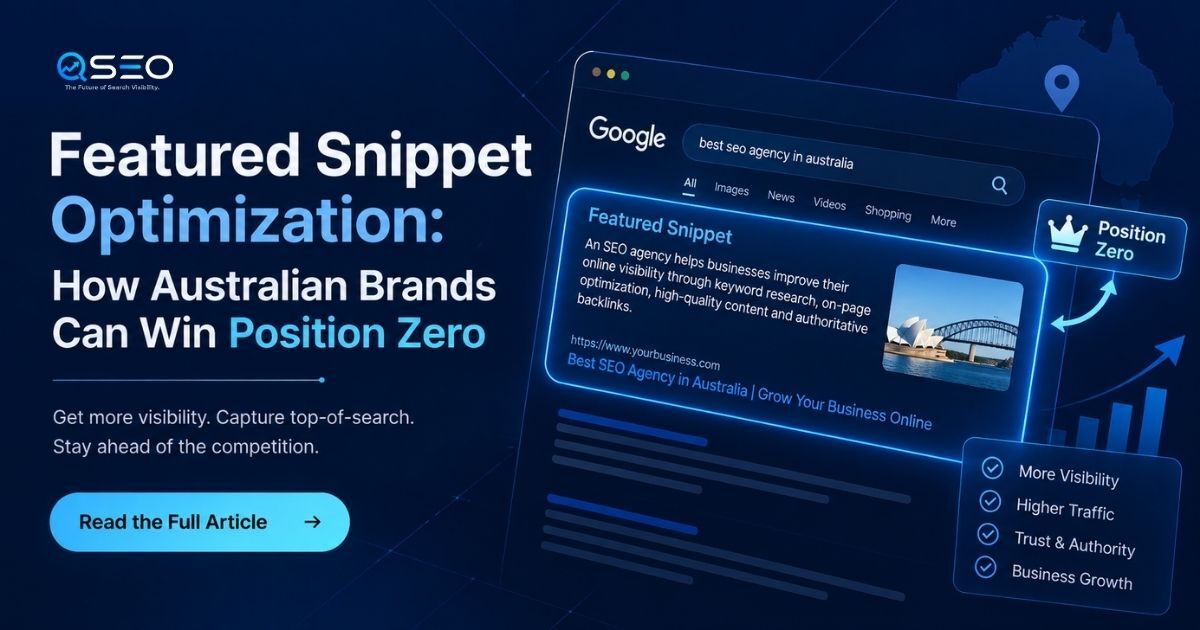
Most Australian brands chase page-one rankings and stop there, missing the one spot that sits above every blue link on the page. Featured snippet optimization is how you claim that spot, and effective optimization has become more valuable, not less, now that Google AI Overviews pull from the same well-structured content.
What Actually Wins Position Zero for Australian Websites?
Google typically pulls featured snippets from pages already ranking in positions two to five, favouring content with a direct 40 to 58 word answer placed immediately beneath a question-style heading. Clean HTML structure, matching schema and genuine topical authority all improve extraction odds. Featured snippet optimization rewards format precision over raw domain strength.
Why Position Zero Still Matters in the AI Overview Era
Some marketers assume featured snippets faded once AI Overviews arrived. In practice, the two work together, since Google frequently draws its AI-generated summaries from the same answer blocks that win snippets.
For brands without decades of domain authority, this levels the field. A tightly formatted answer on a newer Australian site can outrank a legacy competitor simply because it matches the query more precisely.
Structure Content the Way Google Actually Extracts It
The inverted pyramid works best here: answer the question in the first sentence beneath the heading, then add supporting detail afterwards. Burying the answer under three paragraphs of context defeats the purpose entirely.
Match the format to the query type. Process questions want a short ordered list, comparisons want a clean table, and definition queries want a tight paragraph, not a mix of all three crammed together.
Why Structured Data Markup Still Isn't Optional
Structured data markup tells search engines exactly what a page is about, rather than leaving it to guesswork. FAQPage, HowTo and Article schema all help Google connect your content to the right query and query variant.
Sites skipping structured data markup in 2026 are effectively asking search engines and AI crawlers to work harder for the same information, which rarely ends in your favour when a competitor has already made it easy.
Connecting Snippets to Voice Search Optimization
Voice assistants overwhelmingly read out existing featured snippets rather than crafting fresh answers, so voice search optimization and snippet work are really the same job wearing two names.
Roughly four in ten Australian households now use a smart speaker, and most spoken answers run under thirty words. Writing tight, conversational answers built for reading aloud supports both goals at once.
Common Mistakes That Cost Australian Brands Position Zero
Targeting queries you don't already rank for on page one wastes effort, since Google rarely pulls snippets from page two. Vague, marketing-heavy headlines instead of question-matching headings also work against extraction.
Letting content go stale is another quiet killer. Google favours freshly reviewed pages for snippets it already owns, so an unrevised answer eventually loses its spot to a more current competitor.
Turning Position Zero Into Real Business Growth
Winning a snippet isn't the finish line. Tracking which queries you hold, refreshing weak answers and expanding into related questions keeps the visibility compounding rather than fading after a few months.
OSEO Digital builds this exact discipline into every engagement, pairing structured content, technical schema and voice-ready formatting so Australian brands don't just rank, they get chosen as the answer.
FAQs
1. What is featured snippet optimization, in simple terms?
Featured snippet optimization is the practice of structuring content so Google can extract a clear, direct answer to display above standard search results. It involves question-based headings, concise 40 to 58 word answers, and clean HTML formatting that search engines can read and lift without ambiguity.
2. How does structured data markup help with ranking?
Structured data markup adds machine-readable context around your content, helping search engines understand entities, relationships and page purpose more precisely. It improves eligibility for rich results and featured snippets, and increasingly helps AI systems cite your content accurately when summarising answers for real users searching every day.
3. Is voice search optimization still relevant with AI Overviews everywhere?
Yes, genuinely. Voice search optimization remains relevant because voice assistants typically read out existing featured snippets rather than generating new answers. Writing short, conversational responses that work well when spoken aloud continues to support both traditional voice queries and newer AI-driven answer experiences simultaneously, without extra effort.
4. How long does it take to win a featured snippet in Australia?
Timelines vary by competition and existing rankings. Pages already sitting in positions two to five for a query can sometimes gain a snippet within weeks of reformatting. Brand-new content usually needs several months to build the rankings and authority required before snippet eligibility becomes realistic.
5. Can small or newer Australian businesses realistically compete for position zero?
Yes, absolutely. Google often prioritises format and relevance over sheer domain authority when selecting snippets, which genuinely favours smaller, more focused Australian brands. A precisely structured answer from a newer site can outrank a larger, less specific competitor for the exact query a real person is actually asking.